Introduction.-
This paper aims, on the one hand, to provide the reader who may be a layperson in the field with accurate information about a subject often portrayed as almost ‘evil‘ by “influencers”, nutritionists, clinical nutrition specialists, and even the majority of physicians. On the other hand, it seeks to clarify where in the body and in what proportions it is found, as well as its primary dietary sources. The most instinctive thing that any student of life sciences or a any person interested concerning this “enigmatic devil substance” will do, is to look at the computer the word, and this is the first information they will find:
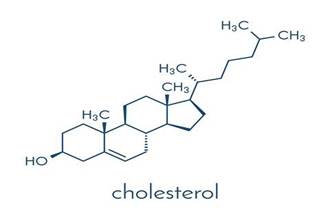
“Cholesterol is a waxy, fat-like substance made by the liver and found in your body’s cells, consisting primarily of LDL (“bad”) and HDL (“good”) cholesterol.”
But let’s uncover the whole truth about this “evil” substance. Cholesterol is a fat-like compound, specifically a sterol lipid that is naturally produced by the liver and essential to every cell membrane and major body tissue. It acts as an essential structural building block (25%) for all body’s cell membrane integrity and serves as a vital precursor for the synthesis of steroid hormones (such as sex hormones), vitamin D, and bile acids necessary for digestion. Cholesterol is the universal precursor, the essential starting raw material for all corticosteroid hormones, as well as all other steroid hormones produced in the body.
Distinctions to Keep in Mind, Cholesterol is NOT a “poison” or “fatty waste”: Life cannot exist without it. Every single cell in the human body requires cholesterol to maintain the fluidity and stability of its outer lipid membrane. Moreover, the brain represents only 2% to 3% of total body weight, however, it harbors roughly 20% to 25% of the body’s entire cholesterol supply, making it the most cholesterol-dense organ in human anatomy.
Cholesterol vs. Lipoproteins: As all fats, Cholesterol is a non-polar molecule, and itself does not dissolve in water or blood plasma. It travels through the bloodstream inside “transport packages” made of proteins and lipids called lipoproteins: LDL (Low-Density Lipoprotein): Delivers cholesterol from the liver to tissues. (Often mislabeled as “bad cholesterol”, though it is simply the delivery truck). HDL (High-Density Lipoprotein): Carries excess cholesterol back to the liver for recycling or excretion. (Often labeled “good cholesterol”).
Further the cholesterol of the brain, the blood-brain barrier blocks circulating blood cholesterol from entering brain tissue, virtually all brain cholesterol is synthesized locally on-site primarily by astrocytes and oligodendrocytes rather than derived from dietary intake.
Refined sugars and saturated fats are far greater drivers of metabolic and cardiovascular risk than dietary (exogenous) cholesterol itself.
For most of the population, dietary cholesterol plays a relatively minor role in determining blood lipid profiles, while high intakes of simple carbohydrates and refined sugars trigger systemic biochemical changes that accelerate vascular disease.
1. The Exogenous Cholesterol Misconception
For decades, public health guidelines advised strict limits on dietary cholesterol (e.g., capping egg consumption). However, major cardiometabolic guidelines—including the Dietary Guidelines for Americans and AHA updates—removed explicit numerical caps on dietary cholesterol based on two key physiological facts:
- Homeostatic Feedback Regulation: The liver synthesizes roughly 70–80% of the body’s total cholesterol daily (endogenous synthesis via HMG-CoA reductase). When exogenous cholesterol intake increases, hepatic feedback mechanisms downregulate endogenous synthesis and reduce intestinal absorption to maintain equilibrium.
- Minimal Impact on Serum ApoB/LDL-C: In roughly 75% of the population (“non-responders”), eating cholesterol-dense whole foods (like eggs) causes little to no change in plasma LDL-C levels. In the remaining ~25% (“hyper-responders”), both LDL and HDL typically rise, maintaining a similar total-to-HDL ratio.
2. Why Refined Sugars Are a Primary Metabolic Concern
Unlike dietary cholesterol, high intakes of refined sugars (particularly sucrose and high-fructose corn syrup) directly drive the biochemical cascade leading to metabolic syndrome and atherogenesis:
- De Novo Lipogenesis (DNL): Fructose bypasses early glycolytic regulatory steps (phosphofructokinase) in hepatocytes. The rapid influx of fructose directly fuels hepatic acetyl-CoA production, driving the synthesis of fatty acids and very-low-density lipoproteins (VLDL) and driving elevated serum triglycerides.
- Small, Dense LDL Particle Formation: High circulating triglycerides lead to lipid exchange via Cholesteryl Ester Transfer Protein (CETP), transforming standard LDL particles into small, dense LDL (sdLDL). These small particles penetrate the arterial endothelium far more easily and are highly prone to oxidation—a critical initiating event in plaque formation.
- Hyperinsulinemia & Endothelial Dysfunction: Chronic consumption of refined carbohydrates induces persistent hyperinsulinemia and insulin resistance. High circulating insulin stimulates HMG-CoA reductase in the liver (upregulating cholesterol production) and impairs nitric oxide-mediated endothelial vasodilation.
- Advanced Glycation End-products (AGEs): Sustained hyperglycemia causes non-enzymatic glycation of vascular proteins and circulating lipoproteins, triggering inflammatory cascades via RAGE receptors that destabilize vascular walls.
3. Myths about cholesterol dietary sources
Although dietary cholesterol accounts for less than 25% of circulating levels, the misinformation targeting the putative sources of ‘bad cholesterol’ is remarkable in its persistence:
a) Fatty Cuts of Beef, Lamb, & Pork (“evil”): ~75–95 mg per 3 oz cooked serving
b) Squid (Calamari): ~230 mg per 3 oz cooked serving
c) Shrimp: ~160–180 mg per 3 oz cooked serving
d) Lobster & Crab: ~75–110 mg per 3 oz cooked serving
e) Dark Meat Poultry (with skin): ~80–90 mg per 3 oz cooked serving.
f) Whole Eggs: ~186–200 mg per large egg.
Note: Due to the extreme variability in fat percentage and dry matter content, data on cholesterol levels in cheeses are not presented.
3. Summary Comparison
| Nutrient/Factor | Effect on Serum Lipids | Metabolic Impact | Primary Risk Factor? |
| Exogenous Cholesterol | Modest/negligible effect for most; buffered by hepatic feedback. | Minimal independent impact on systemic inflammation or vascular signaling. | No (Secondary concern except in hyper-responders/familial hypercholesterolemia). |
| Refined Sugars / Simple Carbs | Drives hypertriglyceridemia, lowers HDL-C, increases small dense LDL particles. | Promotes hepatic steatosis, insulin resistance, endothelial damage, and AGE accumulation. | Yes (Major driver of metabolic dysfunction and CAD). |
| Saturated Fats | Downregulates hepatic LDL-receptor expression, raising circulating ApoB/LDL-C. | Varies by fatty acid chain length, but directly influences particle clearance rates. | Yes (Remains a key focus for circulating LDL particle management). |
4. Do you know that…..

The brain accounts for only 2% of total body weight (about 1.4 kg or 3 lbs.), It contains roughly 20% to 25% of the body’s total cholesterol. Brain tissue contains 15 to 20 mg of cholesterol per gram of tissue, roughly 10 times more concentrated than in most other soft tissues.
5. References
Brown, M. S., & Goldstein, J. L. (2009). Familial Hypercholesterolemia: Defective Binding of Lipoproteins to Cultured Fibroblasts Associated with Impaired Regulation of 3-Hydroxy-3-Methylglutaryl Coenzyme A Reductase Activity. Nutrition Reviews, 43(9), 279–282. https://doi.org/10.1111/j.1753-4887.1985.tb02449.x
Cheshire, M. D., & Akbar, U. A. (2024). Akira Endo: Father of Statins. Cureus. https://doi.org/10.7759/cureus.68198
Nair, P. (2013). Brown and Goldstein: The Cholesterol Chronicles. Proceedings of the National Academy of Sciences, 110(37), 14829–14832. https://doi.org/10.1073/pnas.1315180110
Steinberg, D. (2013). In celebration of the 100th anniversary of the lipid hypothesis of atherosclerosis. Journal of Lipid Research, 54(11), 2946–2949. https://doi.org/10.1194/jlr.r043414
Urschel, K., Tauchi, M., Achenbach, S., & Dietel, B. (2021). Investigation of Wall Shear Stress in Cardiovascular Research and in Clinical Practice—From Bench to Bedside. International Journal of Molecular Sciences, 22(11), 5635. https://doi.org/10.3390/ijms22115635
McCance and Widdowson’s The Composition of Foods Integrated Dataset (CoFID) – UK (Public Health England /Quadram Institute) The European standard for food composition tables
USDA FoodData Central (Agricultural Research Service, USDA) fdc.nal.usda.gov
FJGG(09/22/2026)


Leave a Reply